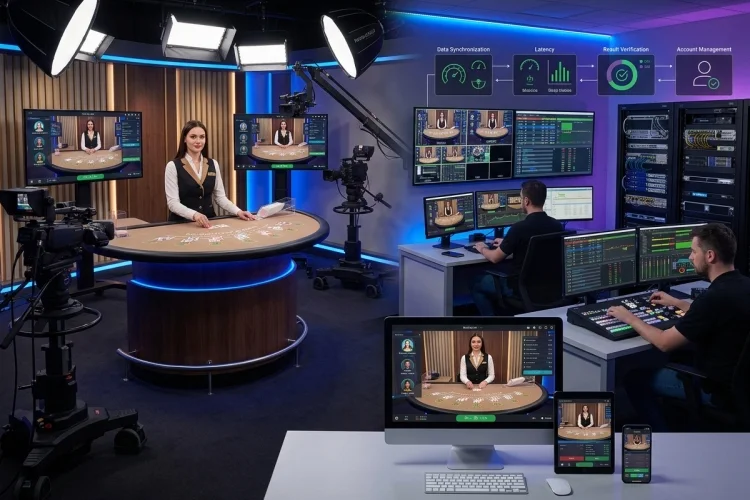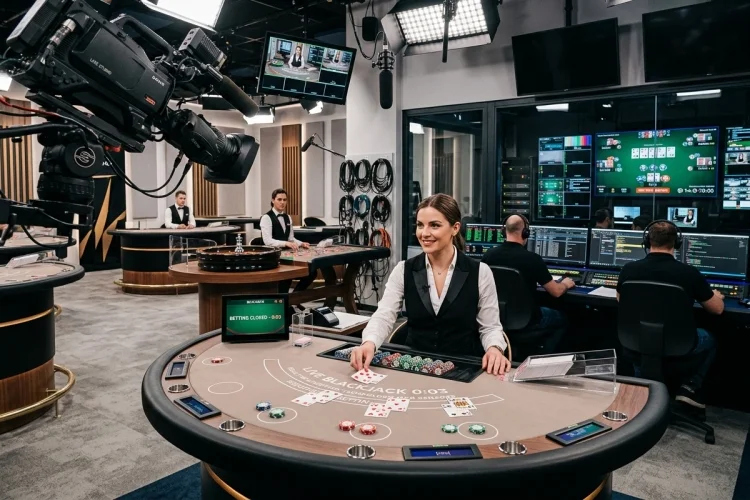
A live casino table is essentially a real-time broadcast connected to an interactive betting platform.
Players see a dealer handling physical cards, wheels, or dice, but they also use digital chips, account balances, countdown timers, and decision buttons. Creating this experience requires much more than placing a camera in front of a gaming table.
A professional operation needs trained presenters, secure premises, commercial-grade equipment, lighting, cameras, streaming infrastructure, game-control software, result-recognition technology, and reliable connections to casino operators.
Understanding how live casino games work behind the scenes reveals why synchronization is one of the most important parts of the system. Hundreds or even thousands of remote users may watch the same round while placing different wagers.
The technology must accept every bet before the deadline, connect it with the correct result, and calculate each payout accurately. This article explores the technical journey from the studio floor to the player’s screen.
Inside a Professional Live Casino Studio
A live dealer studio may contain many gaming tables in one controlled facility. Each area is designed for a particular game, language, operator, or target market.
Dealers work in front of cameras rather than serving customers sitting physically around the table. Behind them, production teams may monitor video feeds, equipment, lighting, sound, technical systems, and operating procedures.
Live casino providers can operate shared environments used by several gambling websites or dedicated studios created for one operator. Dedicated tables may use customized branding, dealer uniforms, backgrounds, and language options.
The Role of the Live Dealer
The dealer is responsible for conducting the physical game according to documented procedures. This may include shuffling and dealing cards, spinning a roulette wheel, announcing results, managing equipment, and communicating with players.
Dealers do not normally handle deposits or withdrawals, and they cannot select which online participant receives a winning result. All accepted wagers are processed by the platform according to the same physical round.
Regulatory guidance states that live croupiers should receive adequate training and refresher instruction so games are delivered fairly and according to their documented rules.
Cameras, Lighting, and Video Streaming
Studios use professional cameras to give players a clear view of the dealer and essential equipment. One angle may show the complete table, while another focuses on cards, roulette pockets, dice, or result displays.
The video is encoded, compressed, and transmitted through online streaming infrastructure. The system must balance image quality with speed because an extremely large video stream may create delays on slower connections.
Players may be able to adjust resolution, sound, or screen size. However, the official game timing continues at the studio even when an individual player experiences buffering.
The Game Control Unit
The game control unit connects the physical table with the digital gaming platform. It helps manage betting periods, round identification, accepted wagers, game states, and final results.
When a new round begins, the unit signals the interface to open betting. When the countdown expires, the table moves into a closed state so no additional wagers can be accepted.
Every round needs a unique and accurate record. This prevents a bet intended for one roulette spin or card deal from being attached to a later outcome.
Optical Recognition and Equipment Sensors
Live games may use optical character recognition to convert visible information into digital data. For example, card values shown by the dealer can be recognized and displayed automatically on the player interface.
Roulette tables may use approved sensors or result-entry systems to identify the winning pocket. Other products may rely on scanning technology, physical controls, or verified staff confirmation.
Technology supports the dealer rather than replacing the physical game. The UK Gambling Commission distinguishes live dealer products from random-number-generated games because physical cards, wheels, and other real equipment determine their outcomes.
Synchronizing Bets With Physical Results
Synchronization ensures that every accepted digital wager is linked to the correct studio event. The platform must track when betting opened, when it closed, what result occurred, and which participants qualify for payment.
This is particularly important when one physical table is distributed through multiple casino websites. Players may use different currencies or interfaces, but their wagers still relate to the same round.
GLI evaluates live dealer operations through areas that can include responsibility, staffing, premises, systems, technical performance, and synchronicity.
Testing can identify problems in the connection between the studio event and digital account system.
How Payouts Reach Player Accounts
Once the result is confirmed, the casino software applies the game’s payout rules. A straight-up roulette number, blackjack win, baccarat Banker wager, and side bet will each use different calculations.
The system updates the account balance automatically. Players usually do not need to make a separate claim, although certain large or unusual prizes may be reviewed according to operator procedures.
Transaction information should clearly show the amount wagered and the result. UK remote standards require gambling systems to make the amount being gambled available to the customer, including conversions into chips or credits.
Studio Integrity and Independent Auditing
A regulated studio requires more than functioning cameras. Physical equipment, consumables, staffing responsibilities, dealing procedures, maintenance, game records, and incident handling may all form part of integrity controls.
UK standards require live dealer operations to be fair and independently auditable. Commercial casino-quality equipment and ongoing monitoring are recommended to support reliable operation.
The wider remote gambling system may also be subject to technical and security requirements.
The UK Gambling Commission updated its remote standards information in January 2026, including requirements applicable to licensed remote operators and gambling software providers.
What Happens When Something Goes Wrong?
Technical problems can affect the video feed, betting interface, card recognition, or result transmission. Licensed platforms should have documented procedures for interrupted or cancelled rounds.
If a wager has already been accepted, the round may continue even when the player loses the video connection. The final result and any payout can still be applied to the account.
Players should read the game’s interruption policy before participating. Screenshots, transaction histories, and round identifiers can be useful when reporting a dispute to customer support.
Behind every live casino game is a coordinated production and technology system.
Trained dealers handle real equipment, cameras broadcast the action, game-control units manage each round, and result-recognition tools convert physical outcomes into digital information.
The casino platform then matches the result with accepted wagers and updates player accounts. Independent testing, secure studios, equipment monitoring, and audit records help maintain operational integrity.
Before joining a table, examine the provider, licence, rules, streaming performance, and dispute procedures. Watch the system in action without wagering first, then use affordable stakes and firm session limits if you decide to participate.