
Online casino games do not always rely on animated cards, digital wheels, or computer-generated tables. Live casino technology allows players to watch real dealers handle cards, spin roulette wheels, and manage games through a real-time video stream.
Live Dealer Casino Games combine parts of a traditional casino floor with the convenience of online play. You interact through a digital betting interface while a dealer conducts the physical game in a studio.
For beginners, understanding the streaming process, table rules, betting windows, game variations, and limits makes the experience much easier to follow.
What Are Live Dealer Casino Games?
Live dealer games are online casino games conducted by real dealers or presenters and streamed to players over the internet.
Instead of watching an animated roulette wheel, for example, you may see a physical wheel being spun in a professional studio. In blackjack, a dealer can handle real cards while players make decisions through buttons on their screens.
Evolution describes its live casino studios as advanced broadcasting environments using cameras, audio equipment, and IT systems to transmit games in real time. Players can place bets, make game decisions, and interact through the interface.
The basic idea is simple: physical casino action happens in one location while the player participates remotely.
How a Live Dealer Studio Works
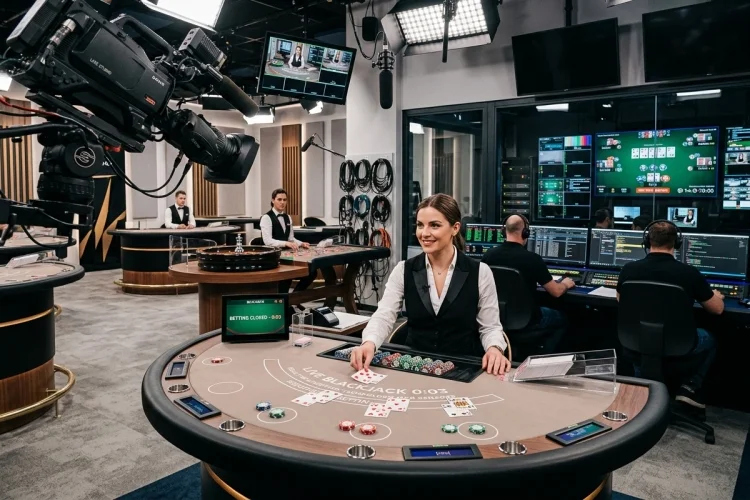
A professional live casino studio looks partly like a casino and partly like a television production set.
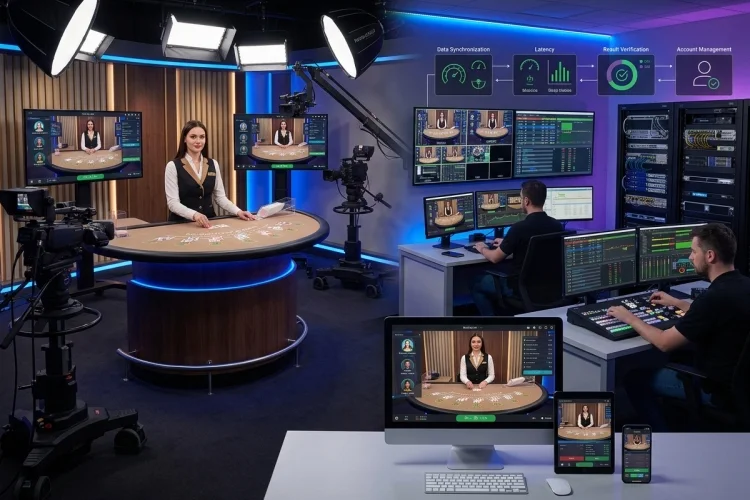
There may be multiple tables operating at the same time, each with dealers, cameras, lighting systems, microphones, and game-monitoring equipment. Some providers also operate branded or dedicated studios for particular casino operators.
Multiple cameras help viewers see the important parts of each round. Roulette may show the dealer and wheel from different angles, while baccarat can use close-up shots of the cards.
Evolution’s Live Baccarat Squeeze, for example, uses numerous cameras to capture the card-reveal process from several angles.
Behind the visible studio is software connecting the physical game with the online betting interface.
What Happens When You Join a Table?
Joining a table normally does not interrupt the current game.
You may enter while a round is already underway and wait until the next betting period begins. Once betting opens, the screen displays virtual chips or controls that let you select an available wager.
A countdown usually shows how much time remains.
When betting closes, the dealer performs the next action, such as dealing cards or spinning the roulette wheel. Results are then reflected in the online interface before the next round begins.
This repeated cycle makes live games relatively easy to understand after watching a few rounds.
Many interfaces also include game history, statistics, rules, and chat functions, although exact features vary by provider and jurisdiction.
Popular Types of Live Casino Games
Several traditional casino games have become standard live dealer categories.
Live Blackjack
Blackjack lets players make decisions such as hit, stand, double, or split where the rules permit. Live versions may include standard tables, speed formats, unlimited-seat variants, and additional side bets.
Evolution currently offers multiple live blackjack formats, including conventional and alternative versions designed for desktop and mobile play.
Live Roulette
Live roulette uses a physical or automated wheel while bets are placed digitally.
Players can usually choose from familiar inside and outside wagers, although exact payouts and wheel formats depend on the table. Evolution also offers speed, VIP, immersive, and other roulette variants.
Live Baccarat
Baccarat generally asks players to wager on Player, Banker, or Tie.
Some tables include additional options such as pairs and other side bets. Evolution’s baccarat portfolio illustrates how one basic game can be offered in standard, speed, squeeze, and no-commission formats.
How the Dealer and Software Work Together
The dealer handles the physical part of the game, while software manages the player’s digital interation.
A blackjack dealer may physically draw cards while the software displays your available decisions. At a roulette table, the result of the physical wheel is communicated to the game interface so qualifying bets can be settled.
Players should remember that not every product using realistic video is necessarily a live-dealer game.
Evolution’s EZ Dealer Roulette, for example, uses pre-recorded video together with an RNG rather than a live dealer conducting each round in real time.
Checking the game’s information screen helps distinguish genuine live tables from RNG or hybrid products.
Why Table Limits Matter
Live tables can have very different minimum and maximum stakes.
A lower-limit blackjack or roulette table may suit someone working with a smaller entertainment budget, while VIP tables can require much higher stakes. Evolution specifically offers multiple table types with varying limits, including higher-limit VIP environments.
Always check the minimum wager before joining.
A $100 budget behaves very differently at a $1 table than at a $20-minimum table. The second table allows far fewer rounds if results go against you.
Table limits therefore matter more for bankroll planning than the appearance of the studio.
Understand Side Bets Before Using Them
Live blackjack and baccarat tables often provide optional side bets alongside the main game.
For example, baccarat may offer wagers based on pairs or other special card combinations. Ezugi’s standard Baccarat lists side bets such as Perfect Pair, Either Pair, Player Pair, and Banker Pair.
These wagers can make a round more varied, but their rules and payouts should be evaluated seperately from the main bet.
A visually large payout does not automatically indicate better mathematical value.
Open the help menu and check what outcome is required, what the payout is, and whether the wager carries different odds from the standard game.
What Are Live Casino Game Shows?
Live casino content now extends beyond traditional blackjack, roulette, and baccarat.
Game-show products combine live presenters with large wheels, multipliers, bonus rounds, or other interactive-style features. Evolution lists titles such as Crazy Time, MONOPOLY Live, Dream Catcher, and other live game-show formats.
These games may look closer to television entertainment than a traditional casino table.
However, the same basic rule applies: understand how each bet is settled before wagering.
Multipliers and bonus rounds may look dramatic, but the paytable and probability structure remain more important than the presentation.
Check Licensing Before Playing
A polished live stream does not prove that the casino operating the website is properly regulated.
Licensing depends on jurisdiction. In Great Britain, companies offering online gambling to consumers must hold the appropriate Gambling Commission licence, and consumers can check the regulator’s public register.
Other countries use different licensing frameworks.
Before depositing, verify which legal entity operates the website, which regulator oversees it, and whether the casino is authorised for your location.
Do not rely only on a licence logo shown in a footer.
Keep Live Play Within a Clear Budget
Live games can move quickly.
Evolution’s Speed Roulette, for example, advertises rounds that can complete in around 25 seconds.
Faster rounds mean more wagering opportunities can occur within the same amount of time.
That makes stake size and session limits particularly relevent. Decide what amount is available for entertainment before joining the table, rather than increasing the budget after losses.
Where responsible gambling tools are availble, financial limits can provide another boundary around spending.
Live Dealer Casino Games combine real dealers, physical equipment, streaming technology, and online betting interfaces in one experience. Blackjack, roulette, baccarat, and live game shows can all use slightly different rules and limits.
Before joining a table, check its betting range, paytable, game format, licensing information, and optional wagers. Most importantly, decide your entertainment budget before the first round begins.